


Last Updated: Junho 2, 2026
Short Answer
Slow Windows startup is usually caused by too many startup apps, storage pressure, driver issues, updates, or an aging system drive. It is not normally fixed by buying a product key, but after reinstalling or upgrading Windows you should confirm that the installed edition matches the activation record.
- Start with the installed Windows edition and activation status.
- Use Microsoft support pages for official activation behavior.
- Use WinProKeys support for order, delivery, setup, and common troubleshooting context.
Windows 10 and 11 Slow Startup Decision Checklist
Short answer: fix slow startup by checking startup apps, storage, Windows updates, malware or PUP risk, drivers, hardware age, and Startup Settings before assuming the problem is activation or a product key. Keep clean install and order-specific support review as later, evidence-based routes.
| Slow-startup checkpoint | What to verify | Best next route |
|---|---|---|
| Start with startup apps before deep repairs | A slow boot is often caused by too many apps launching at sign-in, update helpers, tray utilities, or background services. Disable only what you recognize and keep security tools enabled. | Use Microsoft startup-app guidance and the Windows 10/11 speed-up guide before treating the issue as a license problem. |
| Check storage, updates, and malware/PUP risk | Low free space, pending Windows updates, old drivers, malware, or potentially unwanted programs can make startup feel like an activation or system problem when the root cause is maintenance. | Use Microsoft PC performance tips, Microsoft free-space guidance, and the Windows Guides hub. |
| Separate old hardware from Windows version fit | Older PCs may start slowly because of hardware age, unsupported firmware, HDD storage, or a Windows 10 to Windows 11 readiness gap. Windows 10 standard support ended on October 14, 2025, so upgrade planning should be separate from simple speed tweaks. | Use the Windows 10 end-of-life upgrade checklist and the Windows 11 hardware checklist before activation. |
| Use Safe Mode or Startup Settings for diagnosis | If the PC is still very slow, compare normal boot with Safe Mode or Windows Startup Settings before wiping the system. A clean install should be a backed-up, last-resort path, not the first startup fix. | Use Microsoft Windows Startup Settings, the clean install Windows 11 guide, and the bootable USB guide only after backup and diagnosis. |
| Keep performance issues separate from activation issues | Windows activation state, Home/Pro edition, digital license, and typed product key checks matter when activation is blocked. They do not usually explain slow startup by themselves. | Use the after-purchase setup checklist, Windows product-key FAQ, Windows key types guide, and digital license vs product key guide when activation wording appears. |
| Route exact activation errors privately if they appear | If a slow-startup case also shows 0xC004F050, 0x803F7001, 0xC004F074, no valid license, or wrong-edition wording, record the exact wording and keep order-specific evidence private. | Use the Windows activation error-code hub, private support evidence checklist, How WinProKeys works, delivery policy, after-sales policy, and contact support. Do not post full product keys, order references, account identifiers, payment details, or private screenshots in public comments. |
WinProKeys is an independent software-key reseller, not Microsoft. Microsoft Support pages are source context for Windows performance, startup apps, free-space cleanup, and Startup Settings; WinProKeys pages explain setup, activation routes, delivery, after-sales, and private support routing after the facts are clear.
Fix Slow Startup on Windows 10 and 11 is a practical guide for users who want a clear answer, not generic advice.
Top Optimization Actions
- Trim startup apps.
- Clean temporary files and optimize storage.
- Update GPU/chipset/network drivers.
- Use appropriate power profile.
- Scan for malware and PUPs.
Do This Safely
Avoid risky registry hacks and security feature changes unless you understand the impact. Create restore points first.
If optimization is blocked by activation wording, check the Windows activation error-code hub.
Recommended next checks: compare the Windows 10/11 speed-up guide, Windows Guides hub, activation error-code hub, and after-sales policy.
Best Practices
Always keep your product key archived securely, verify edition compatibility before purchase, and run activation in a stable network environment. For organizations, document deployment records and maintain a simple validation checklist so each installation follows the same standard process. This reduces support tickets and speeds up issue resolution when errors appear.
When you troubleshoot, change only one variable at a time. First verify system date/time, then license edition, then network path, then key input. Structured troubleshooting avoids confusion and prevents unnecessary reinstallations.
FAQ
Can I reactivate after reinstalling?
Usually yes on same hardware and same edition.
Do I need internet?
In most cases, yes.
How long does it take?
Simple startup-app cleanup can be quick, but update, storage, malware, driver, hardware, or clean-install routes can take longer and should be checked one step at a time.
What if activation also fails?
Keep the exact activation wording, installed Windows edition, and order reference for private support. Do not post full product keys, account identifiers, payment details, or private screenshots publicly.
Next Diagnostic Checks
Before treating slow startup as a purchase or activation problem, compare the Windows 10/11 speed-up guide, clean install Windows 11 guide, and private support evidence checklist.
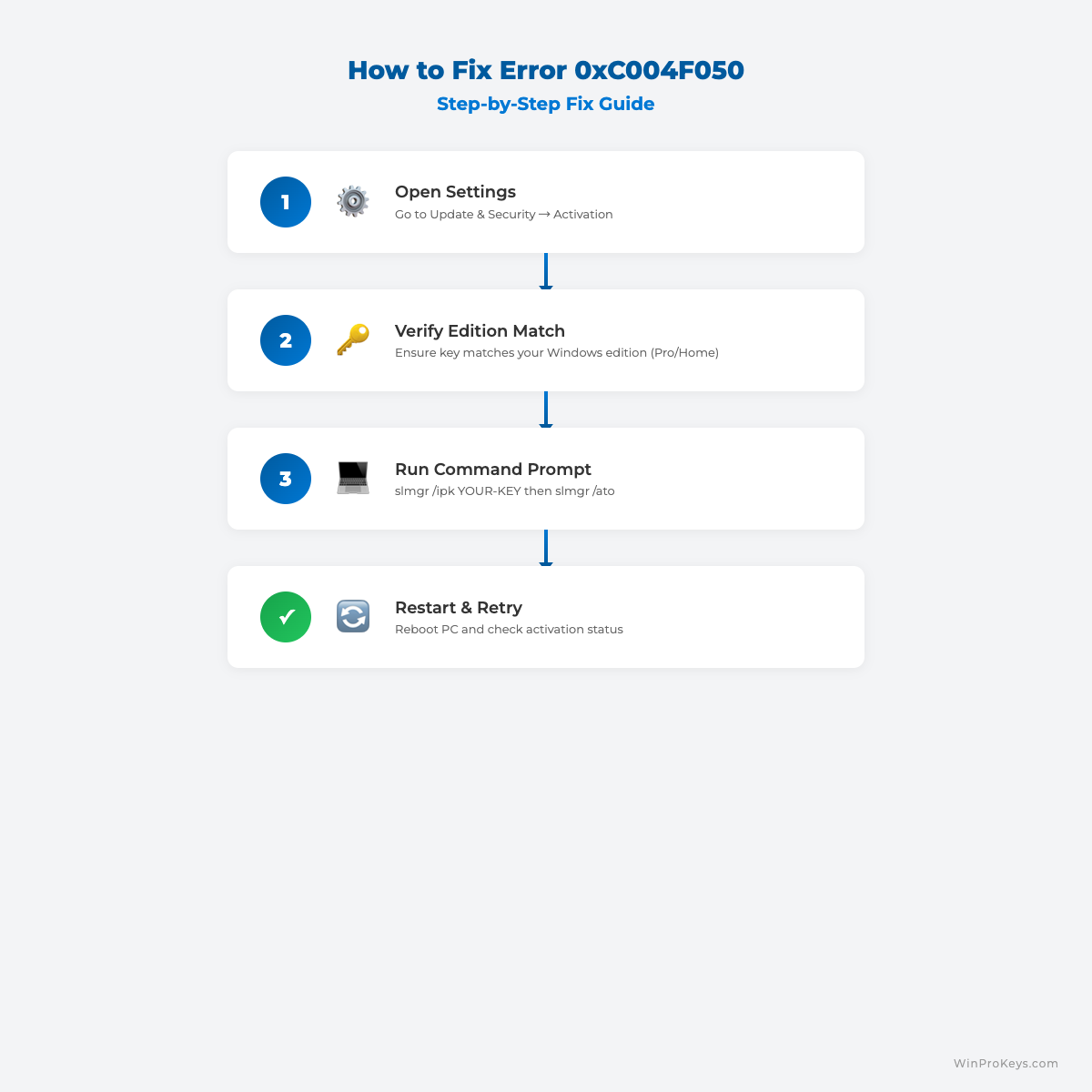
Visual Fix Guide
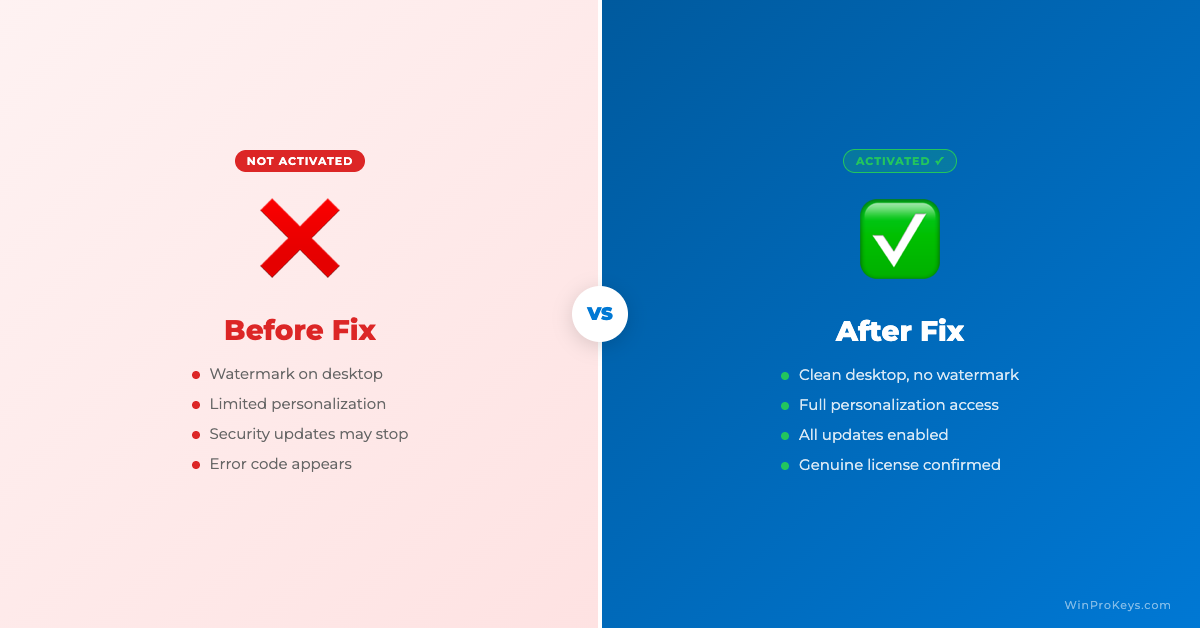
Before vs After Activation
Source and Support Links
Use Microsoft Support pages as source context for Windows performance, startup apps, storage cleanup, and startup settings. Use WinProKeys pages for setup, activation, delivery, after-sales review, and reseller-specific support guidance.
Frequently Asked Questions
What should I check first for Fix Slow Startup on Windows 10 and 11?
Check startup apps, free storage space, Windows Update state, malware or PUP risk, device age, and recent driver or hardware changes before treating the issue as activation or product-key related.
Is WinProKeys operated by Microsoft?
No. WinProKeys is an independent software-key reseller, not Microsoft. Microsoft Support pages are source context for Windows performance, startup apps, storage cleanup, startup settings, and activation behavior.
What should I send support if activation does not work?
Keep the private order reference, installed Windows edition, exact activation wording, and whether this is a new PC, reinstall, upgrade, BIOS update, or hardware-change case. Do not post full keys, account identifiers, payment details, or private screenshots in public comments.
Need the live product pages?
If you have finished the guide and need the current Windows or Office pages, use the shop as the source of truth for pricing, delivery details, and activation help.
Open the shopUse the next step that matches your setup
Stay with the Windows and Office routes we actively maintain most. Choose the guide, troubleshooting path, or hub that answers the next real question instead of jumping into an unrelated product page.
Use the live guide or product page as the source of truth for delivery, redemption, and post-sale support details.

