


Last Updated: 1 June, 2026
Short Answer
Before upgrading from Windows 10 to Windows 11, confirm hardware support, back up files, and check whether your current Windows edition is Home or Pro. Activation usually carries over on the same device when the edition matches, but hardware changes or a clean install can create extra checks.
- Check TPM, Secure Boot, CPU, RAM, and storage.
- Keep the same Home or Pro edition during upgrade.
- Save the order or digital-license record before changing the system.
Windows 10 to Windows 11 Upgrade Methods Checklist
Use this checklist before deciding whether a Windows 10 to Windows 11 upgrade is free or paid. The right route depends on Windows 10 support status, hardware eligibility, upgrade method, same-edition activation, clean install needs, Home to Pro edition changes, exact error wording, and private support evidence.
| Upgrade checkpoint | What to verify | Best next route |
|---|---|---|
| Start with Windows 10 support status | Windows 10 standard support ended on October 14, 2025. Decide whether this PC should move to Windows 11, use a limited ESU or temporary route, or be replaced. | Use Microsoft Windows 10 support status, the Windows 10 end-of-life options guide, Windows 10 end-of-life upgrade guide, and the Windows 10 vs Windows 11 upgrade decision guide. |
| Check hardware eligibility before download | Confirm supported CPU, TPM 2.0, Secure Boot, RAM, storage, firmware, and driver readiness before starting an upgrade tool or USB installer. | Use Microsoft Windows 11 specifications, the Windows 11 compatibility checker, and the Windows 11 hardware checklist before activation. |
| Choose the free in-place upgrade route first | When the PC is eligible and already has an activated same-edition Windows 10 license, Windows Update, Installation Assistant, or installation media may move it to Windows 11 without buying another key. | Use Microsoft Windows 11 installation methods, Microsoft Windows 11 download page, and the Windows 10 vs Windows 11 decision guide before choosing a paid route. |
| Know when the upgrade becomes paid | Costs usually appear when hardware is unsupported, a new PC or drive needs a fresh license, the user changes Home to Pro, or the existing activation and digital license cannot transfer. | Use the Windows key hub, Windows product-key FAQ, Windows 10 key on Windows 11 guide, and digital license vs product key guide. |
| Pick clean install only when it fits | Use clean install for a new SSD, an unstable old system, malware recovery, or a clean start. Back up files and choose the exact edition first. | Compare the clean install Windows 11 guide with clean install vs upgrade license guide before wiping the device. |
| Keep edition and activation separate | Windows generation upgrade, Home to Pro edition change, and product-key activation are separate decisions. Do not assume one key solves compatibility, edition, and activation at once. | Use Microsoft activation context, Microsoft product-key context, the Home-to-Pro upgrade checklist, and the Windows 11 Pro activation tutorial. |
| Route failures by exact wording | If setup or activation shows 0xC004F050, 0xC004C003, 0x803F7001, TPM, Secure Boot, unsupported CPU, no-valid-license, or hardware-change wording, diagnose that message before retrying. | Use Microsoft activation-error context, the Windows activation error-code hub, and the Windows 11 upgrade activation-failed checklist. |
| Use private support evidence | Do not post full product keys, order emails, Microsoft account emails, payment details, or private screenshots in public comments, forums, AI chats, or creator threads. | Use the after-purchase Windows key checklist, private support evidence checklist, How WinProKeys works, the delivery policy, after-sales policy, and contact WinProKeys support when order-specific review is needed. |
WinProKeys is an independent software-key reseller, not Microsoft. Microsoft pages are source context for Windows 10 support status, Windows 11 requirements, installation methods, downloads, activation, product-key lookup, and activation-error behavior; WinProKeys pages explain edition fit, clean-install choice, activation routing, delivery, after-sales, and private support review.
How to Upgrade from Windows 10 to Windows 11 (Free and Paid Methods) is a practical guide for users who want a clear answer, not generic advice.
Before You Begin
- Back up data.
- Check device compatibility.
- Prepare USB and stable internet.
Complete Procedure
- Download Media Creation Tool/ISO.
- Start upgrade or clean install.
- Install drivers and updates.
- Activate Windows.
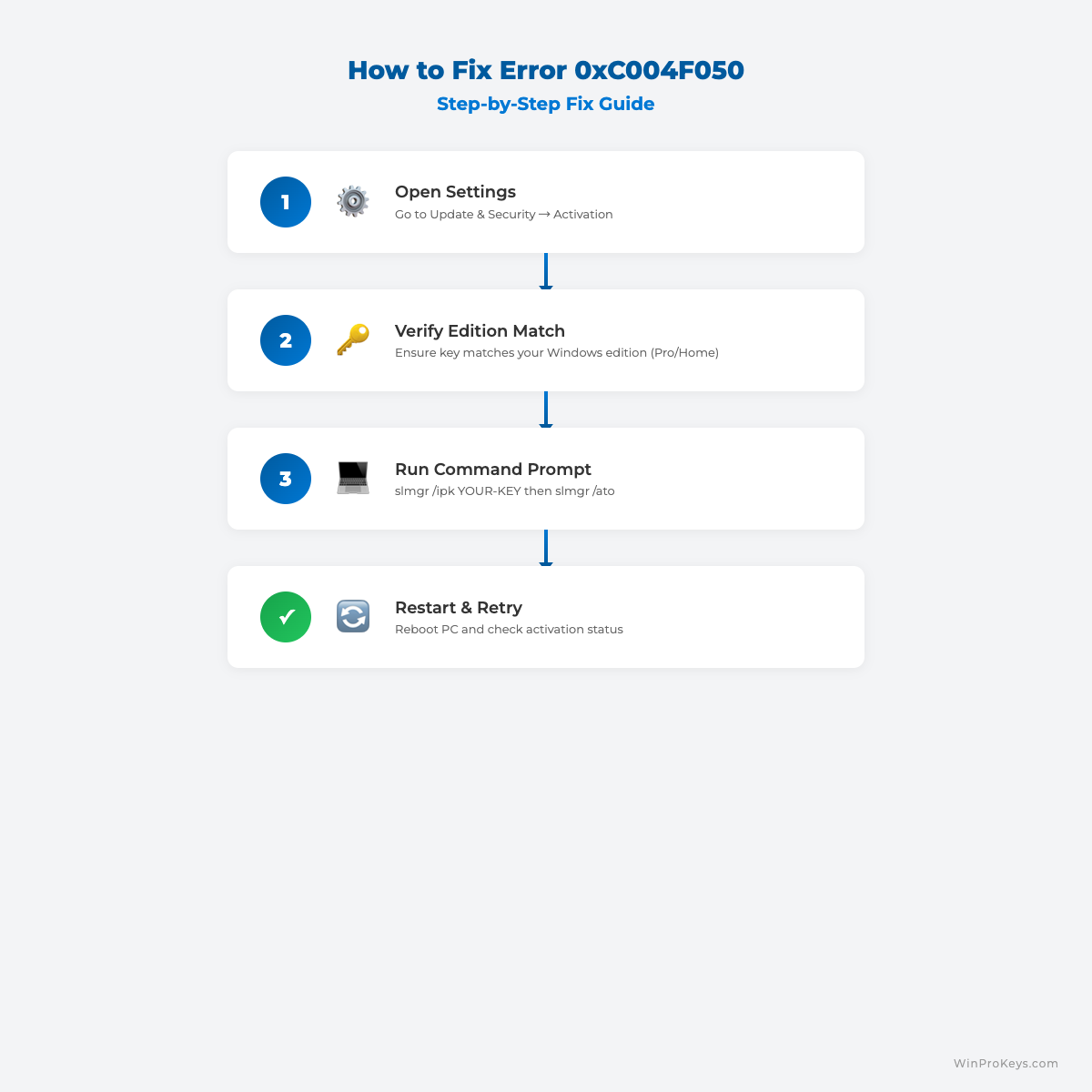
Activation issues? Start with the Windows activation error-code hub or the Windows 11 upgrade activation-failed checklist.
Next support checks: review hardware compatibility, same-edition activation, clean-install risk, and private support evidence before choosing a license route.
Best Practices
Always keep your product key archived securely, verify edition compatibility before changing license or edition, and run activation in a stable network environment. For organizations, document deployment records and maintain a simple validation checklist so each installation follows the same standard process. This reduces support tickets and speeds up issue resolution when errors appear.
When you troubleshoot, change only one variable at a time. First verify system date/time, then license edition, then network path, then key input. Structured troubleshooting avoids confusion and prevents unnecessary reinstallations.
FAQ
Can I reactivate after reinstalling?
Usually yes on same hardware and same edition.
Do I need internet?
In most cases, yes.
How long does it take?
Timing varies by device, network, Microsoft activation state, and whether the upgrade changed hardware or edition.
What if activation still fails?
Use private support with the exact error code, visible non-sensitive wording, installed edition, device context, and order reference. Do not post full keys, order emails, Microsoft account emails, payment details, or private screenshots publicly.
Before You Buy or Change a Windows Key
Confirm hardware eligibility, same-edition activation, Home to Pro needs, clean-install plans, and exact error wording before choosing a license route. Use store and support pages for delivery and after-sales context, and keep order-specific details private.
- Windows product-key FAQ
- Windows 10 key on Windows 11 guide
- After-purchase Windows key checklist
- How WinProKeys works
- Delivery policy
- After-sales policy
Visual Fix Guide
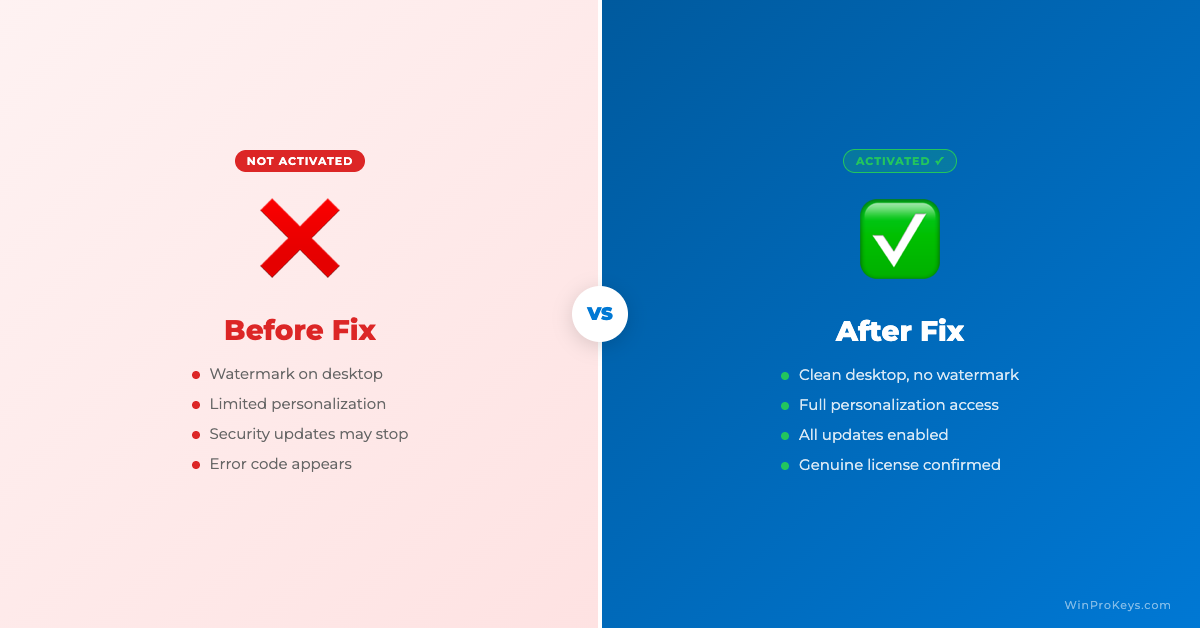
Before vs After Activation
Source and Support Links
Use Microsoft and Windows pages for Windows 10 support status, Windows 11 requirements, installation, activation, and product-key context. Use WinProKeys pages for store delivery, order support, and reseller-specific guidance.
Frequently Asked Questions
Does Windows 10 support still matter?
Yes. Windows 10 standard support ended on October 14, 2025, so compatible PCs should usually plan a Windows 11 path.
Will my Windows key still work after upgrading?
It often carries over on the same device if the edition stays the same, but hardware changes and edition mismatch can cause activation issues.
Should I upgrade Home to Pro at the same time?
Only if you need Pro features such as BitLocker, Remote Desktop host, Hyper-V, or domain join.
Use the next step that matches your setup
Stay with the Windows and Office routes we actively maintain most. Choose the guide, troubleshooting path, or hub that answers the next real question instead of jumping into an unrelated product page.
Use the live guide or product page as the source of truth for delivery, redemption, and post-sale support details.

